Why TherapyCam?
Driven by passion
Are you a mental health therapist who uses a computer with a built-in camera positioned above your screen for virtual therapy sessions?
Or an external webcam that sits on top of your monitor?
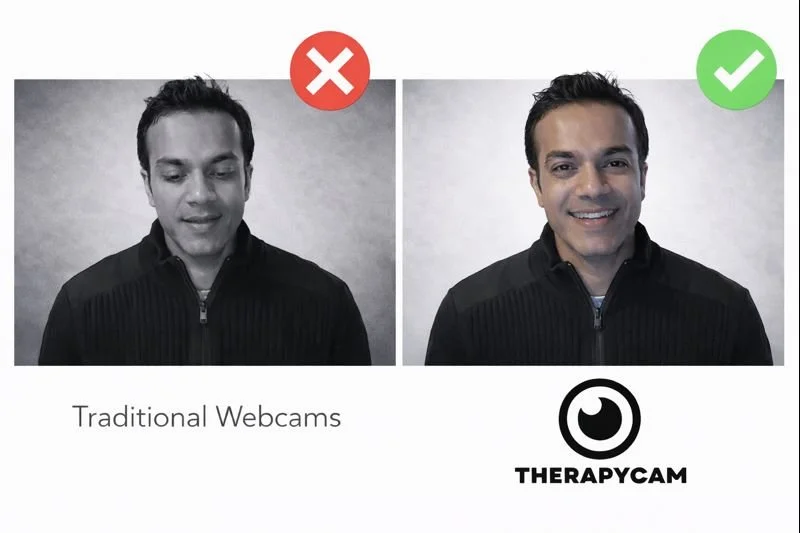
If so, your camera setup may be quietly interfering with one of the most important tools in therapy: eye contact.
Eye contact is foundational to the therapeutic alliance. It supports trust, attunement, and the experience of being seen—core elements of accurate empathy and meaningful connection.
With the rapid adoption of telehealth since COVID-19, many clinicians now find themselves looking at their clients on screen rather than into the camera. From the client’s perspective, this can feel like the therapist’s gaze is consistently directed downward or away—subtly weakening connection over time.
In an in-person session, we would never maintain eye contact by looking above our client’s head. Yet online, traditional top-mounted webcams make this the default.
Telehealth has dramatically expanded access to care—and it’s here to stay. The way we connect through it needs to evolve as well.